

High-Rate Composite Preform Automation Becomes a Reality




ABOUT Loop Technology
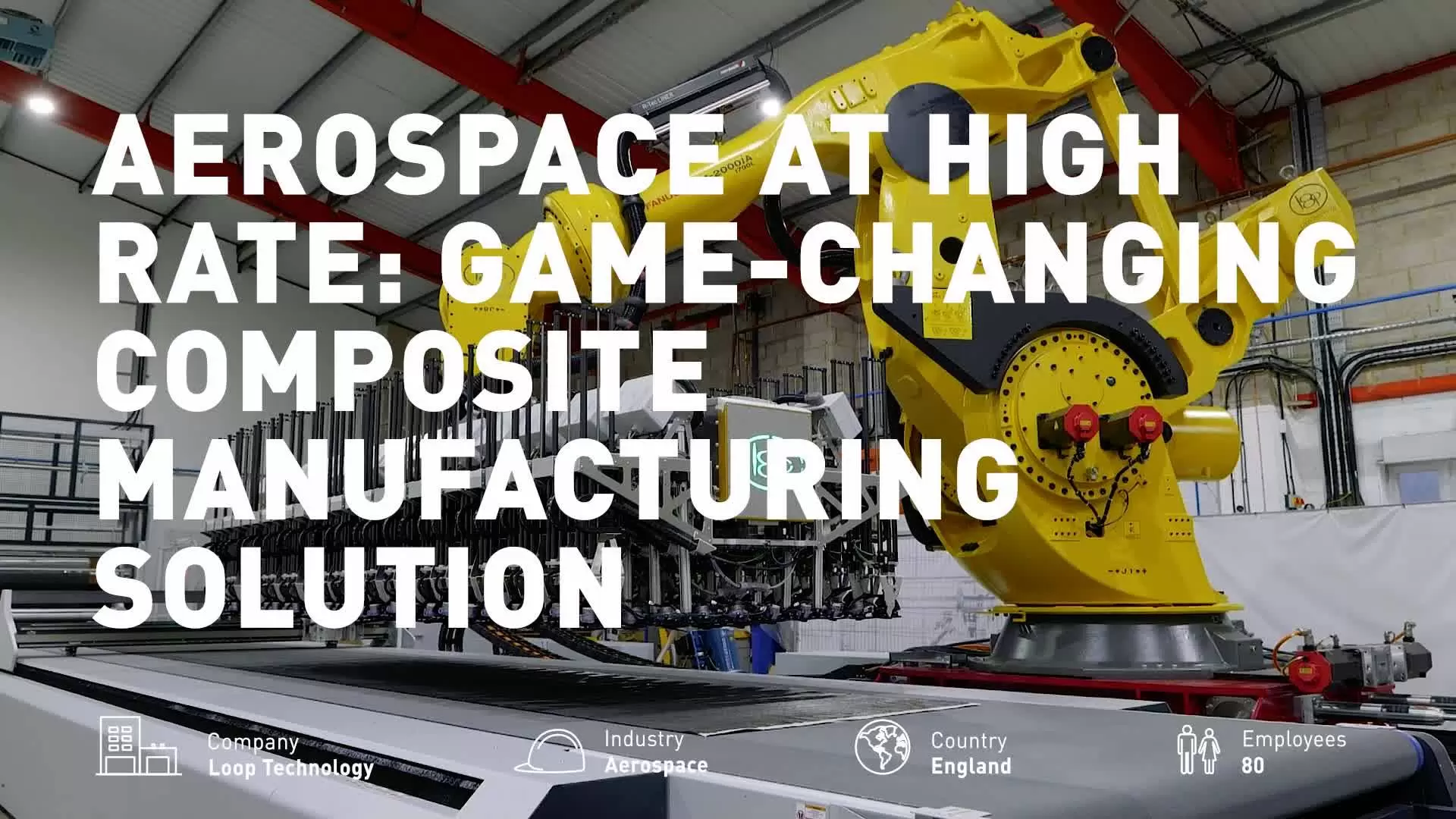
Loop Technology is a specialist in industrial automation solutions. Founded in 1998 by Alun Reece, the ISO9001-accredited company operates UK facilities in Dorchester, Sheffield and Bristol, employing around 80 people. Loop Technology develops advanced manufacturing systems that combine robotics, machine vision and motion control to improve efficiency in a range of applications, including composite structures. Its FibreLINE technology supports the ultra-high-rate cutting, sorting, lay-up, inspection, tacking and consolidation of composite materials for global aerospace programmes.
A Game-Changing Solution for Composite Structure Manufacturing
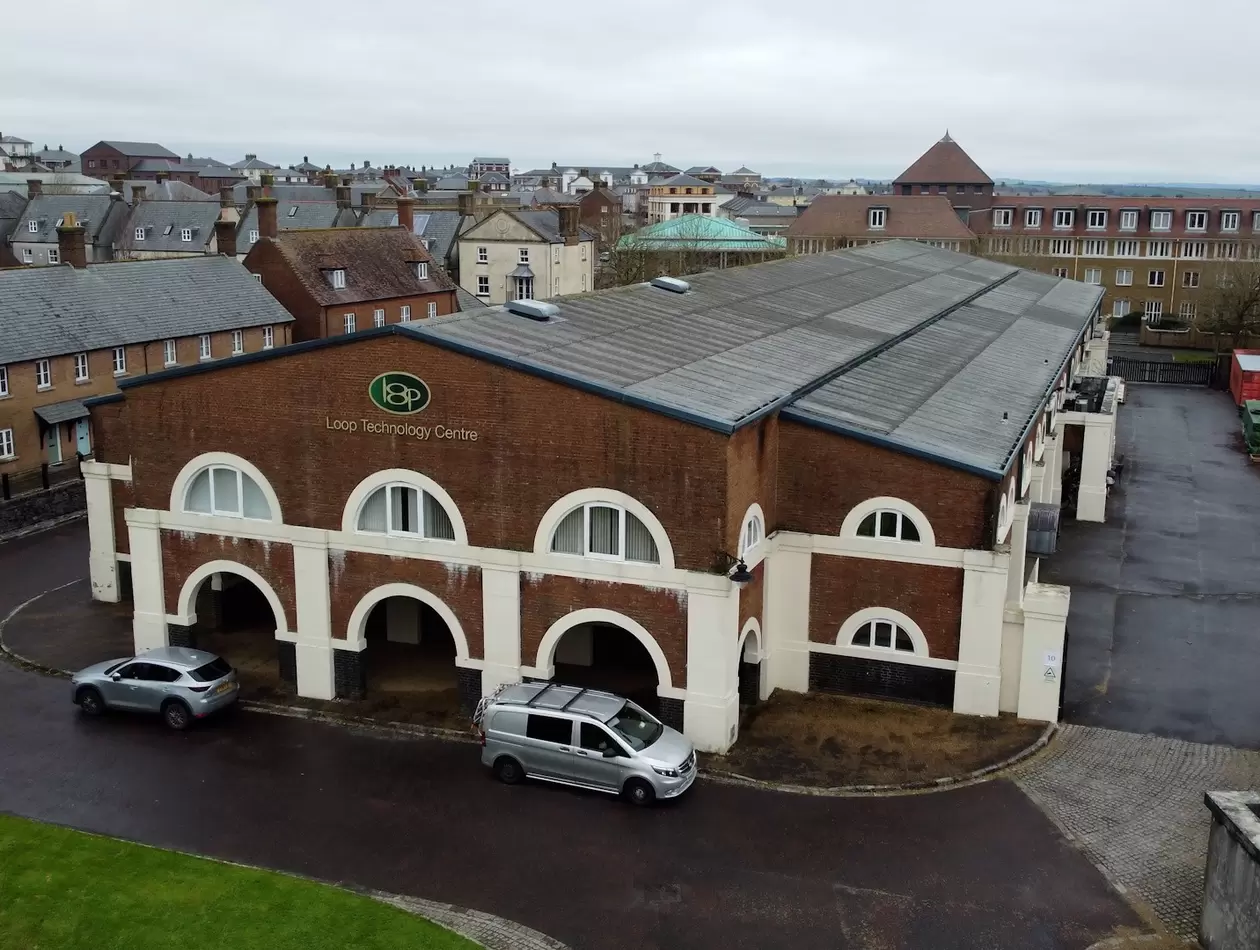
For aerospace manufacturers targeting the next generation of aircraft production, accelerating the rate of composite structure production while maintaining strict quality standards presents a major challenge. It is precisely this challenge that drove Loop Technology to develop FibreLINE, an advanced automated composite preform manufacturing system supported by FANUC heavy-payload industrial robots.
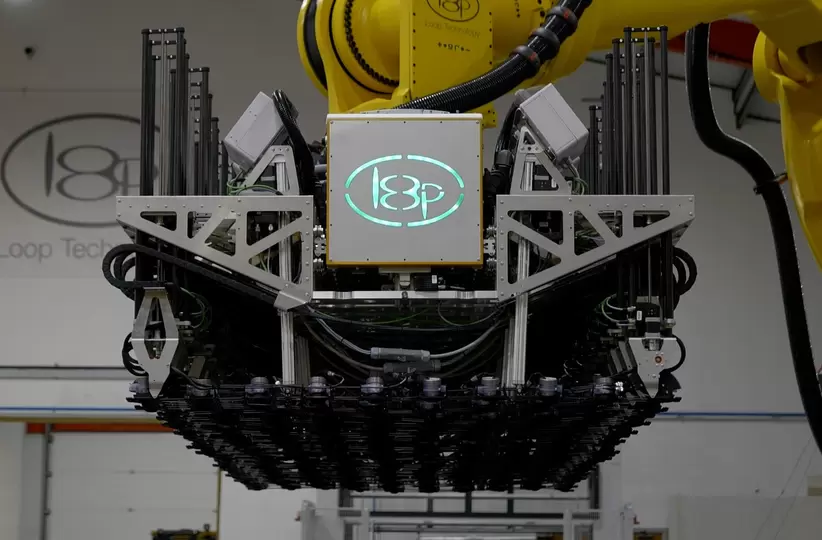
FibreLINE is dedicated to the production of primary aerospace composite structures. Central to the system is FibreFORM, an active pick-and-place conformal end effector. FibreFORM is capable of handling large composite plies more than 20 m in length and placing them accurately on to complex 3D double-curvature profiles at high speed.
However, while the composite material itself is lightweight, the end effector is both large and heavy. The company therefore required robots that were capable of manipulating heavy loads over a wide volumetric area. For Loop Technology, the FANUC M-2000 series proved the ideal solution.


Alun Reece
Managing Director
Ross Horrigan, Technical Director at Loop Technology, adds: “Our only other option was to build a custom gantry every time. In comparison, the use of FANUC robots allows us to be far more cost-competitive with our FibreLINE offer.”
Unlike gantry systems, which would restrict access within the manufacturing cell, the FANUC robots operate on a single-axis rail configuration that provides improved accessibility and greater flexibility for deposition and inspection operations.
Precision remains critical throughout the process. Composite aircraft structures demand extremely tight tolerances while handling delicate materials that can easily distort during manufacturing.
“Structures that fly require verified quality standards to control the build,” says Reece. “They need to be within production tolerances. And those tolerances are tight.”
To meet these requirements, Loop Technology combines the rigidity and accuracy of its FANUC robots with advanced technologies that include vision guidance and photogrammetry.
“We’re now pushing towards ±1 mm tolerance, even on big structures,” he states.
The productivity gains are also significant.
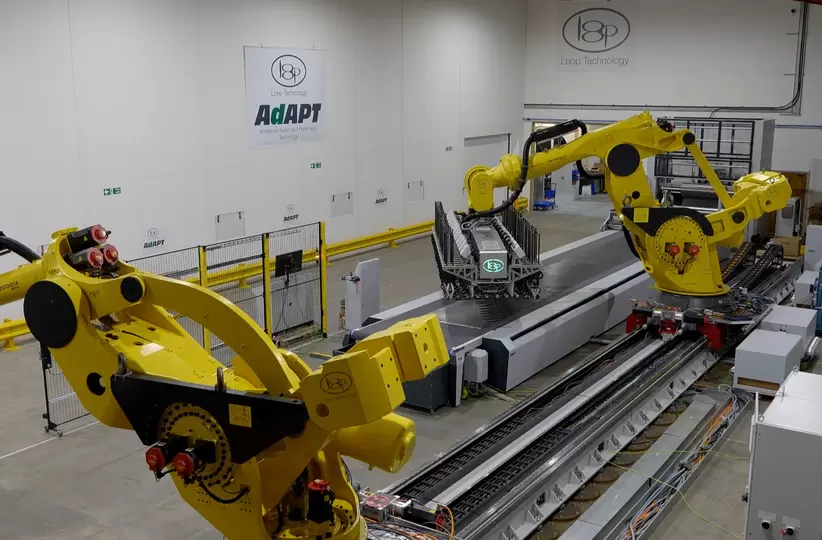
“Aerospace OEMs are focusing on next-generation single-aisle planes, looking to manufacture between 80 and 100 aircraft a month,” reveals Reece. “That’s a lot of carbon fibre that has to go in a mould very quickly. FibreLINE is a game-changer in this regard because of the deposition rates we can achieve. With the help of FANUC robots, we’re able to produce at a rate that would arguably substitute between five and 10 traditional machines.”
Get Inspired
Spolupráce bez překážek přináší optimální výsledky
Cílem společnosti HAGE Sondermaschinenbau bylo vyvinout automatizovaný stroj pro třecí svařování zásobníků baterií pro elektromobily, který vyžaduje vícevřetenové a víceosé svařování. Spolupracovala se společností FANUC, která poskytla 30𝑖-B Plus CNC a šestiosý robot M-900𝑖B/330L spolu s rozsáhlou podporou. S technologií a pomocí společnosti FANUC dokončila společnost HAGE Sondermaschinenbau pokročilý svařovací systém za 10 měsíců. První systémy jsou nyní v provozu u zákazníka.
FANUC Case Studies
Explore our comprehensive range of factory automation solutions, showcased in detailed case studies, and designed to optimise and streamline any manufacturing process.
Manipulace s materiálem