


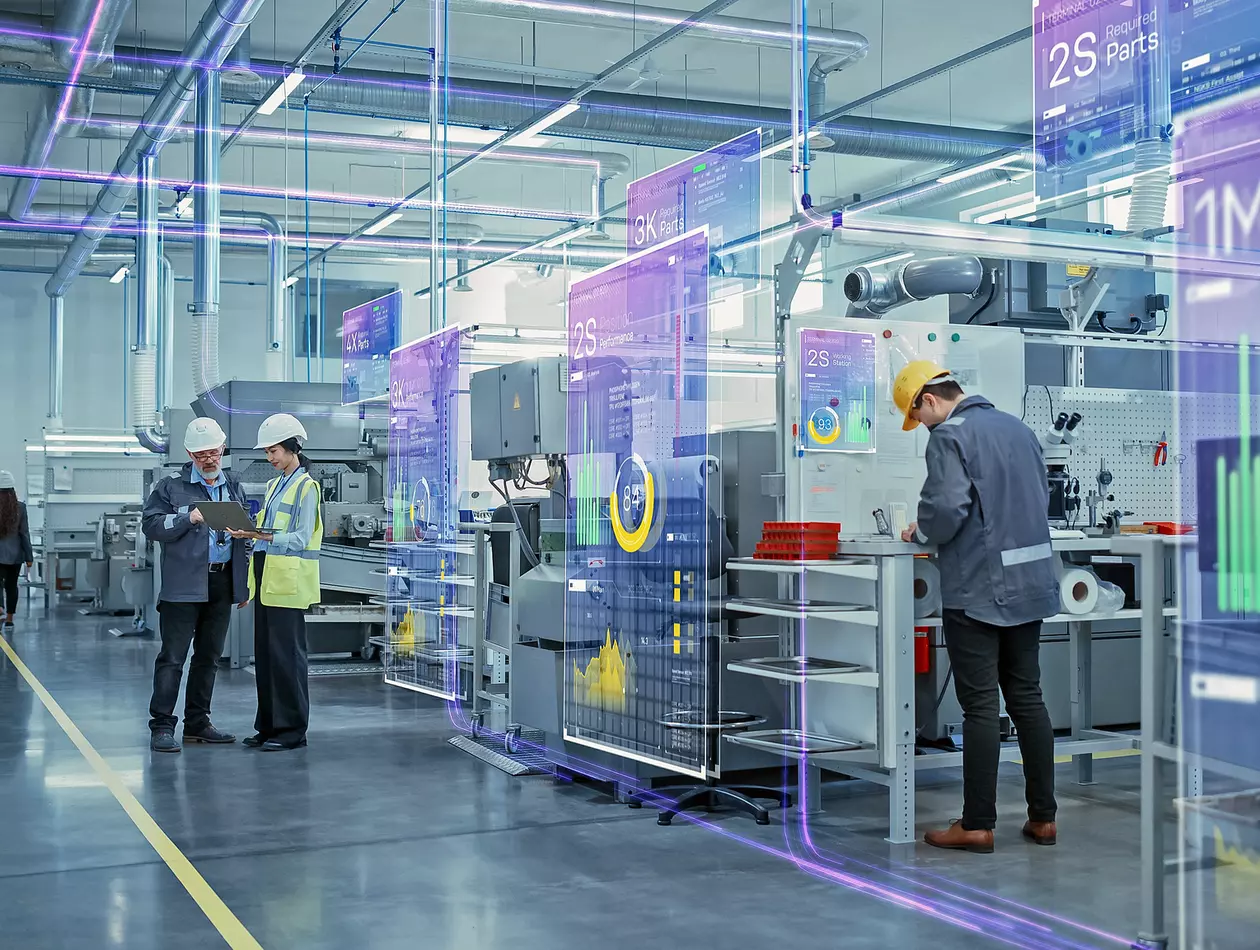
Smart Factory Solutions to Boost Production Efficiency
Looking to Move Your Productivity to the Next Level?
FANUC brings together automation with advanced analytics to drive smarter, faster business decisions for industrial companies, regardless of their size. Discover scalable IIoT products that increase manufacturing efficiency through better production quality, performance, uptime and OEE. Make your production processes more efficient thanks to IIoT solutions from FANUC.
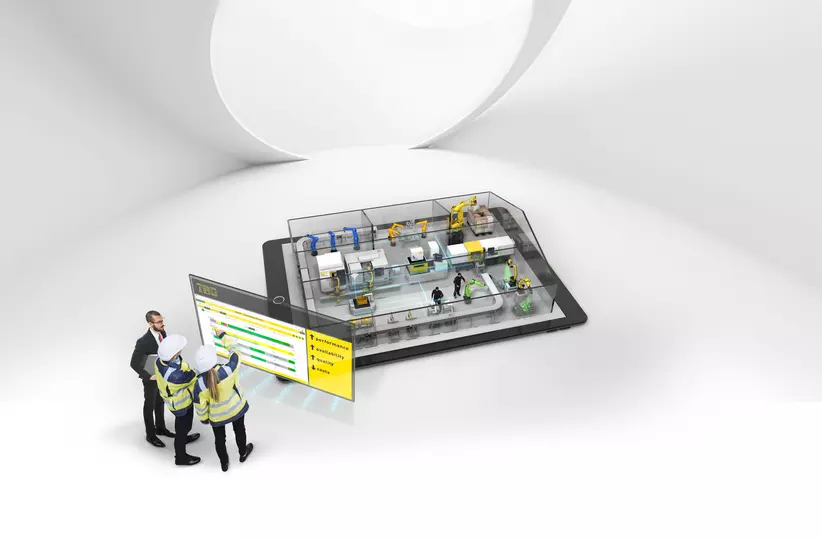
Explore Our Range of IIoT Solutions and Find the Perfect Answer to Your Automation Needs

Performance Improvement

Uptime Improvement

Cost Reduction

Power Monitoring

Quality Improvement

Process Stability

Traceability
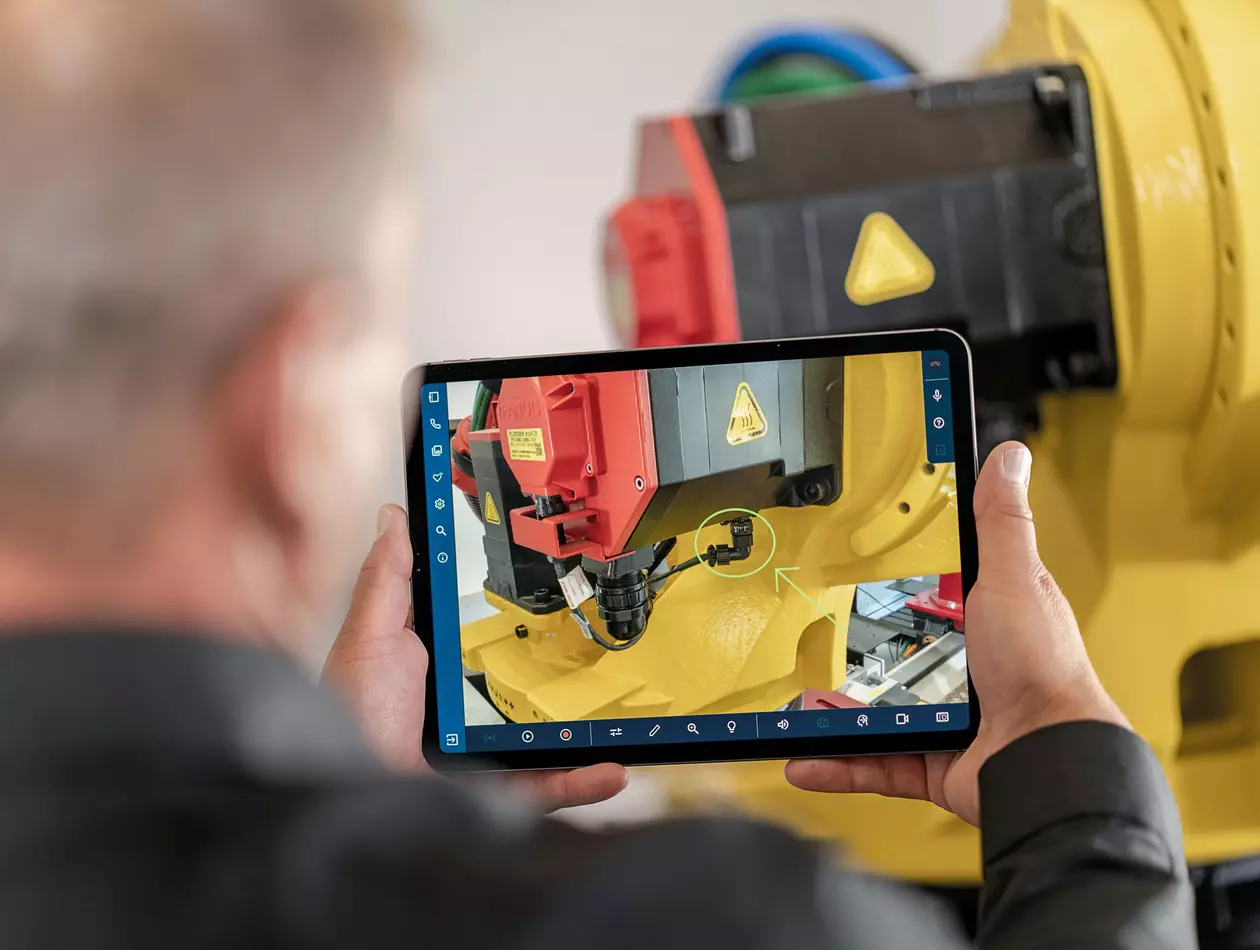
Industrial IoT for Service
Discover how IIoT solutions can enable remote problem diagnosis and minimise unnecessary physical travelling and blind assignments, by supporting field service technicians in improving first-time fix rates.
FAQ
Industry 4.0 is a name given to the fourth industrial revolution. Based on the practical utilisation of the latest technology advances, each industrial revolution represents great change for manufacturing with the intention of delivering significant and widespread improvements.
To provide a brief historical overview, the first industrial revolution, based on steam and water power, dates back to the 1760s. It was over a century before the late 1800s heralded the beginnings of the second industrial revolution, which took advantage of electrification.
The third industrial revolution, which has origins dating back to 1969, tapped into advances in electronics, computing and automation. Coming right up to date, the fourth industrial revolution (Industry 4.0), first mooted in 2011, introduces the manufacturing sector to technologies and concepts such as the internet of things (IoT), cyber physical systems (CPS), networks, cloud computing, cognitive computing and artificial intelligence (AI).
FANUC’s success is based on its pioneering enterprise. The company introduced an Ethernet port to its products way back in the 1990s, already realising the enormous potential of equipment connected to an industrial network. Back then, this feature facilitated the reading and writing of device parameters, program transfer tasks and the collection of back-up data. Today, all FANUC machine tools, CNC systems and robots are IIoT-ready.
No. FANUC knows that manufacturing plants typically host equipment from many different suppliers. As a result, most FANUC IIoT solutions are capable of supporting non-proprietary equipment.
By translating the physical environment into an arena of digital signals, the IoT can drive improvements through faster communications and better analytics. Connectivity and efficient data exchange form the most fundamental part of the IoT, which is why this technology has already had such a vast impact in society. Common examples of ‘everyday’ IoT technology include fitness trackers, smart home devices (smart speakers, smart meters, smart light switches, doorbell cams), personal air pollution monitors and real-time traffic information devices, to list but a few.
The Industrial Internet of Things (IIoT) is the label given to a specific use case of IoT; namely the use of IoT technologies in industry or manufacturing. By adopting an IIoT approach, manufacturers can tap into advantages that include enhanced productivity, lower production costs, improved control over process quality and a reduction of labour-intensive tasks.
IIoT devices are essentially any device deployed within the production process that exchanges data (running status, condition, settings updates, for example) through a network. Common IIoT devices in modern industry include CNC machine tools, robot arms, automated mobile robots (AMRs), PLCs and process-specific systems like measuring machines, welding machines or vision systems. Of course, it is also possible to retrofit sensors to manual machines or systems to make them Industry 4.0-ready.
No. To get the benefits of IIoT, manufacturers only need to utilise their internal network, some connected equipment and selected FANUC IIoT solutions. However in certain cases, cloud server connection brings added value, such as production monitoring from external locations or improved support by remote engineers.